Getting back to hiking and running in Portland: when physical therapy helps
The Gorge trails are dry, Forest Park is green all the way up, and the first warm weekend of June sends half of Portland out to do more than their legs have done since October. By the third week, the texts start: "My knee hurts going downhill. Is this a PT thing?"
The short answer: most post-hike soreness fades in two or three days with rest and a slow return. Pain that is sharp, one-sided, swells, or keeps coming back in the same place after you ease off is the kind physical therapy is built for. In Oregon you can book a physical therapist directly; whether you need a referral for insurance depends on your plan, and the front desk can check for you.
Why the first weeks of summer bring the injuries
Running injuries are common enough that the research spans decades. A systematic review of running-injury studies found the incidence of lower-extremity injuries ranged from about 19 to 79 percent, depending on the population and how injuries were counted, with the knee the most common site. [1] Trail running adds its own pattern: a 2021 review of trail-running injuries found the foot was the most commonly injured area, followed by the knee, lower leg, thigh, and ankle, and that scrapes and cuts, blisters, strains, and sprains dominated the list. [2]
The common thread in the clinic is not fitness. It is the jump. People who were running 10 miles a week in April run 25 in June, or hike 12 miles with 3,000 feet of descent after a winter of flat sidewalks. Tissue adapts, but not that fast.
Which aches settle on their own, and which ones don't

Soreness that is symmetrical, dull, and worst on the second day is usually muscle recovery. Walk, sleep, eat, and give it a few days before you repeat the effort.
The signs that point toward a physical therapy visit, offered as a guide rather than a diagnosis:
- Pain on one side only, especially at a joint: knee, ankle, hip.
- Swelling you can see, or a joint that feels warm.
- Pain that is sharp rather than achy, or that stops you mid-stride.
- The same spot hurting again on your next three outings, even after rest.
- Pain going down stairs or downhill, which tends to implicate the knee's tendons and kneecap.
- Numbness or tingling, which needs an assessment sooner rather than later.
Some things should go to urgent care or your doctor first: a fall with a pop, a joint you cannot bear weight on, a deformed-looking ankle, or anything with fever. We will be here afterward.
What a PT visit here looks like

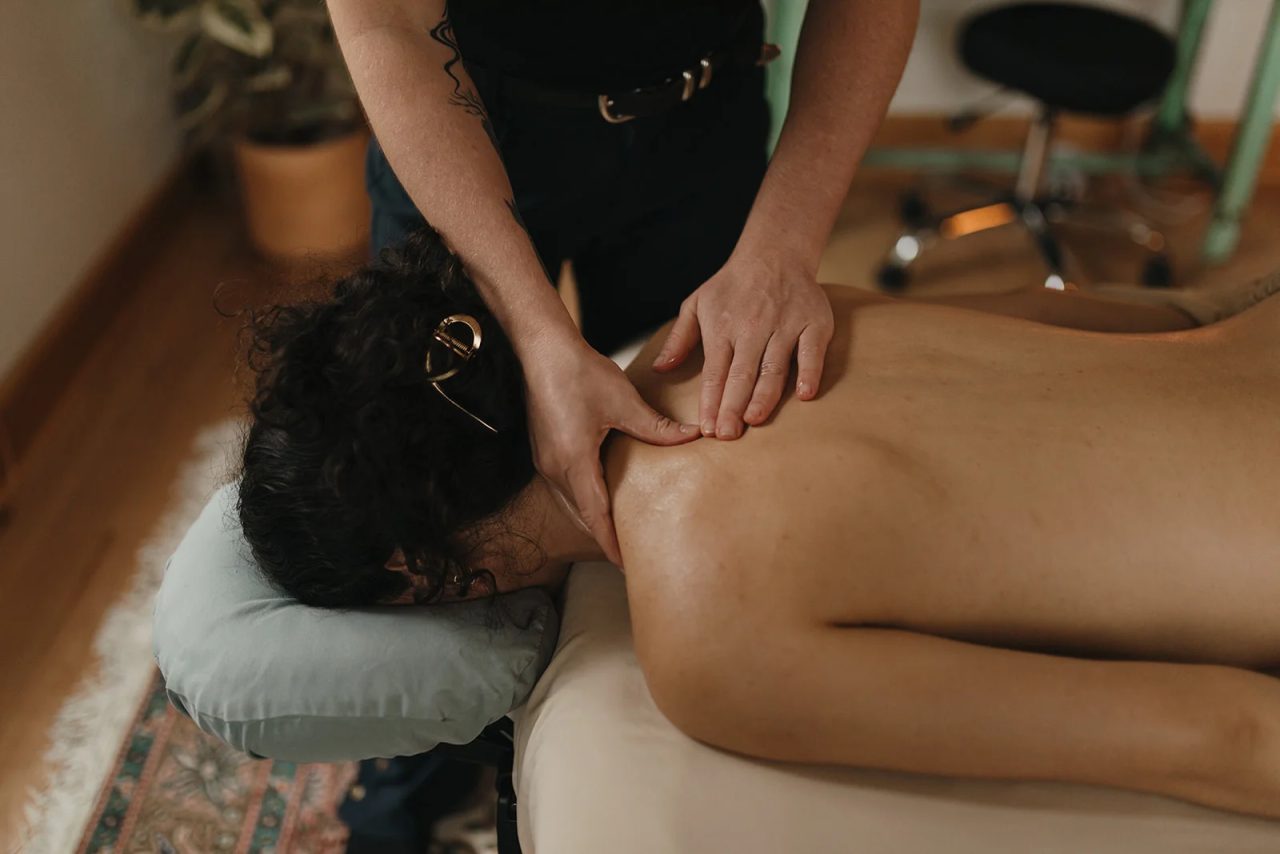
Physical therapy at Mandala is with Katy Kemp, DPT, whose practice covers sport rehabilitation, chronic pain, orthopedic conditions, and recovery after surgery, and who works through exercise, biomechanics, hands-on work, and, when it fits, yoga therapy and Thai massage. [3] Visits are 50 minutes, in person at the clinic on East Burnside or by telehealth for follow-ups. [3]
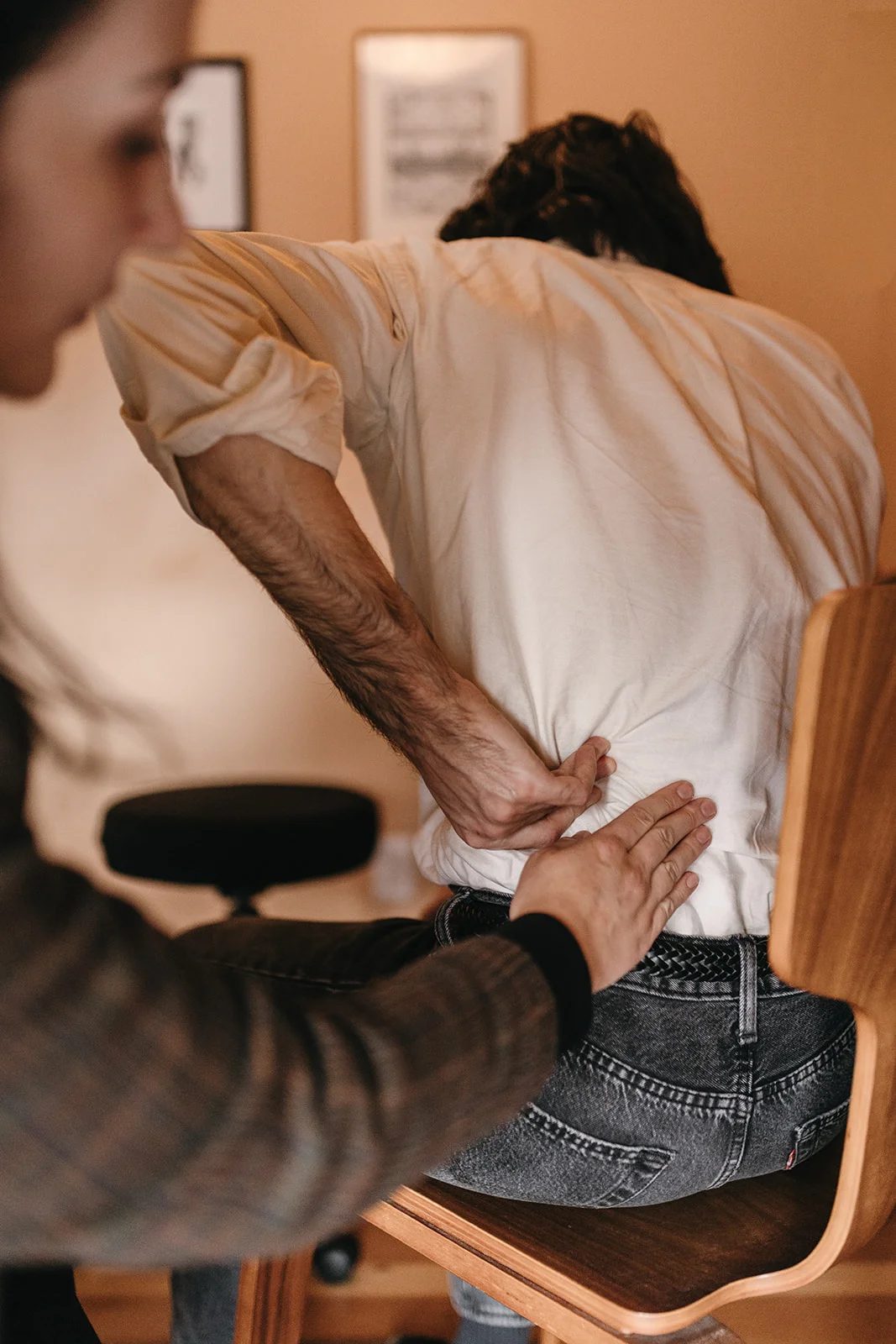
The first visit is mostly assessment. You will likely be asked to walk, squat, step down, or balance on one leg while Katy watches how you move, and expect to answer questions about your training: what changed, when it started, what makes it better or worse. A good PT is a detective before she is a coach. From there you leave with a plan, usually a small set of exercises you can actually do, a sense of how much running or hiking is reasonable this week, and a follow-up date.
What you do not get is a lecture about stopping. The goal of physical therapy for an active person is to keep you active, with the load adjusted so the tissue can catch up.
Referrals and insurance
Oregon allows direct access to physical therapy: you do not need a doctor's referral to be seen. Some insurance plans still require one before they will pay, so the front desk checks when you book. [3] Katy is in network with Moda, PacificSource, and Regence; the full list of who takes what is on the insurance page, and PT visits can also be paid with an HSA or FSA card. [3]
If you were hurt in a crash rather than on a trail, that is a different path with its own billing; see our car accident care page.
Keeping it going
Once the pain is handled, a few habits make next June easier. Build mileage and elevation gradually; the old guideline of no more than about ten percent a week is a rule of thumb rather than a law, but it errs the right way. Keep one strength session a week through the summer, especially hips and calves. Replace shoes before they are dead. And treat the first flicker of a familiar pain as information, not a challenge.
Many of our runners pair PT with massage between sessions, and our acupuncturists see trail injuries too, including one who runs trails himself. If you are new, the first-visit checklist covers the intake form and what to bring.
Sore knee, stubborn ankle, or a hike you want to be ready for by August? Book a physical therapy visit and bring your shoes.
Sources
- van Gent RN, Siem D, van Middelkoop M, et al. "Incidence and determinants of lower extremity running injuries in long distance runners: a systematic review." British Journal of Sports Medicine, 2007;41(8):469-480. PMID 17473005.
- Viljoen CT, Janse van Rensburg DC, Verhagen E, et al. "Epidemiology of Injury and Illness Among Trail Runners: A Systematic Review." Sports Medicine, 2021;51(5):917-943. PMID 33538997.
- Mandala Medicine & Wellness, physical therapy service page and Katy Kemp, DPT bio (visit length, telehealth, referral depends on plan, insurance, HSA/FSA), read 2026-10-07. https://mandalamed.com/services/physical-therapy
- Oregon Revised Statutes chapter 688 (physical therapist practice act; ORS 688.132 sets the duty to refer a patient on to a physician or other provider when findings warrant) and Oregon Board of Physical Therapy rules, OAR chapter 848, division 40, read 2026-10-07. https://secure.sos.state.or.us/oard/displayDivisionRules.action?selectedDivision=3908
Questions
No. Oregon allows direct access, so you can book with Katy Kemp, DPT, without seeing a doctor first. Some insurance plans require a referral before they will pay for visits, so the front desk will check your plan when you book.
It depends on what is hurt and how long it has been hurting. Minor overuse injuries often improve in a few weeks with the right load adjustment; longer-standing problems take longer. Your first visit ends with a realistic timeline, not a promise.
Often, yes, at a reduced volume or intensity. The whole point of PT for runners is to keep you moving while the injured tissue adapts. Katy will tell you what is reasonable each week.
Katy is in network with Moda, PacificSource, and Regence. Other plans may have out-of-network benefits, and HSA and FSA cards are accepted. Call the front desk at 503-758-9760 and we will verify your benefits before your first visit.
The shoes you run or hike in, clothes you can move in, and a rough idea of your training over the last two months: distance, elevation, how often. Complete the intake form online at least 48 hours ahead so the visit can start with your body rather than paperwork.