Microneedling 101: what it does, what it doesn't, and who it's for
Microneedling has a confident marketing vocabulary: glow, rejuvenate, turn back the clock. We would rather you understand what is happening under the skin, where the evidence is solid, and where it is not, before you book. Al Reed, LAc, performs microneedling here, and this post is meant to send you in with good questions rather than big expectations.
The short answer: microneedling makes thousands of tiny, controlled punctures in the skin so that it heals with new collagen. The strongest evidence is for softening acne scars. There is reasonable evidence for fine lines and texture. It takes a series of sessions, results build over months, and it does not erase anything. Some people should not have it at all.
What microneedling is
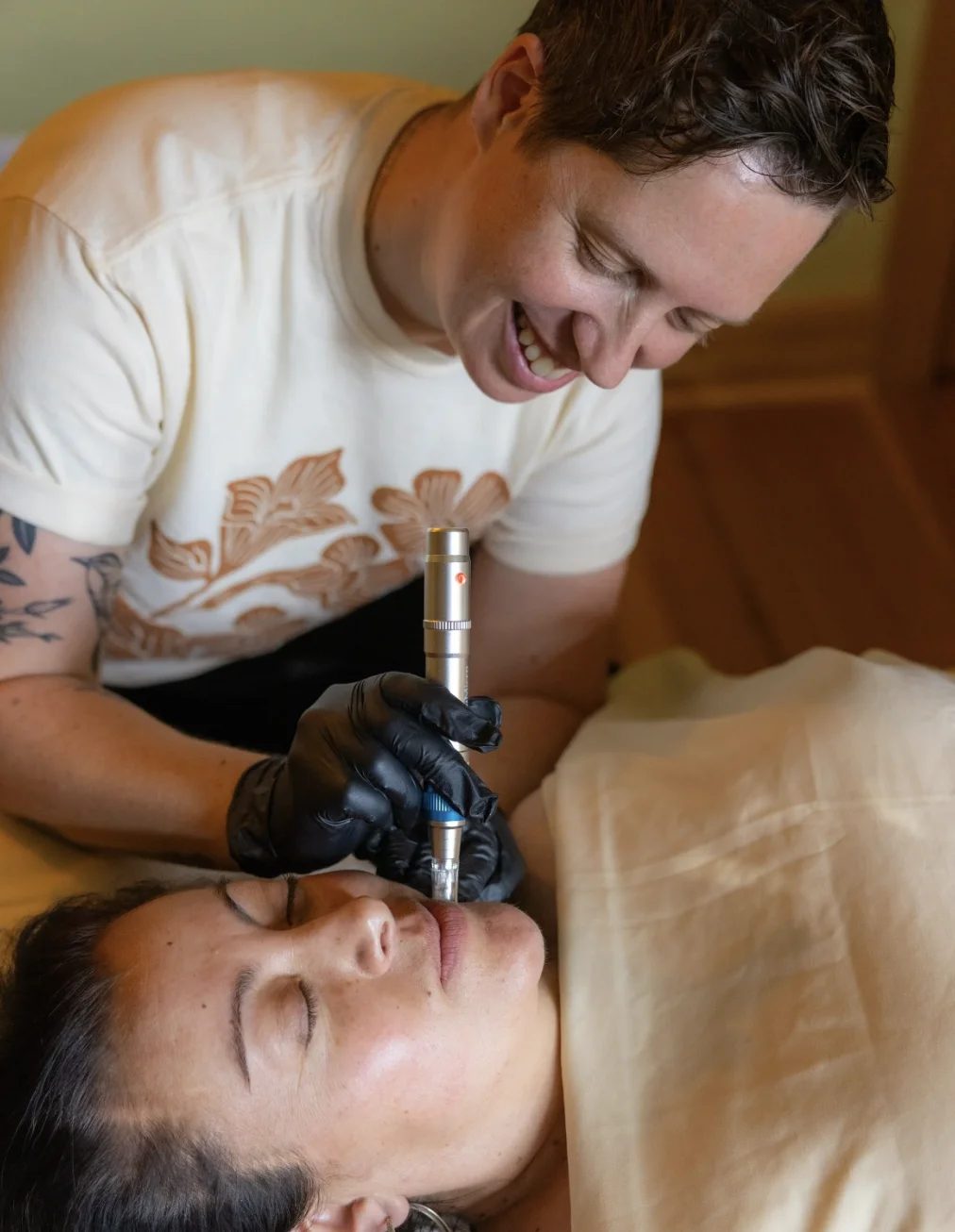
A pen-shaped device with a cluster of very fine needles moves across the skin, usually after a numbing cream, making shallow punctures that you cannot see once they close. The skin reads this as a small injury and responds the way it responds to any small injury: with a wound-healing cascade that lays down new collagen and elastin. The clinical name, collagen induction therapy, is the honest one. [1]
The Food and Drug Administration regulates microneedling devices as medical devices. The uses it has cleared are specific: improving the appearance of facial acne scars, facial wrinkles, and abdominal scars in patients 22 and older. [1] That list is a useful anchor when a brochure promises more.
What the evidence supports
Acne scars. This is the best-studied use. A 2022 meta-analysis of randomized trials found that microneedling on its own improved atrophic (sunken) acne scars, and that it did not cause post-inflammatory hyperpigmentation, the dark marks that some other resurfacing treatments can leave, which matters for anyone with medium or deep skin tones. [2] Scars soften and shallow; they do not vanish.
Fine lines and texture. Facial wrinkles are among the FDA-cleared indications, and texture tends to improve alongside them as new collagen forms. [1] Expect subtle, not dramatic.
Surgical scars. The FDA's clearance covers abdominal scars specifically. [1] Our service page describes scar tissue therapy more broadly, and Al's practice includes postoperative care, which for many trans and non-binary people who have had top surgery can be part of healing in more than one sense. [3]
What microneedling is not
It is not a replacement for Botox or fillers. Those work by different mechanisms, on different problems, and nothing in the microneedling literature shows it beats them. If a deep frown line or lost volume is the thing bothering you, a dermatologist or an injector is the right conversation.
It is not a single appointment. Our service page describes a series of three sessions spaced four to six weeks apart, with results continuing to develop for months as collagen forms. [3] One session will not show you much.
And it is not guaranteed. Skin, age, scar depth, sun habits, and aftercare all change the outcome. We can tell you what is typical; we cannot promise what yours will do.
Aftercare, and who should skip it
The FDA lists the common short-term effects: dryness, rough skin, tightness, redness, itching, peeling, discomfort, burning, bruising, bleeding, and crusting. Less common: pigment changes, cold-sore reactivation, swollen lymph nodes, and infection. [1] Most people look flushed, as if sunburned, for a day or two. Book at least a week ahead of anything you want to look rested for. [3]
Some people should not have microneedling, or should talk with their provider first. Our list, drawn from our service page and overlapping the FDA's cautions:
- Active infection or inflammation in the treatment area: cold sores, active acne, eczema, psoriasis.
- Open wounds or cuts. Skin has to be intact.
- A history of severe keloid scarring.
- Skin cancer or suspicious lesions.
- Bleeding or clotting disorders, or blood thinners.
- Pregnancy. We do not microneedle during pregnancy. [3]
- Recent chemical peels, laser resurfacing, or Botox or filler in the same area.
- Chronic skin conditions, autoimmune conditions, or medications that affect healing. Ask first. [3]
What a visit at Mandala looks like

Microneedling at Mandala is done by Al Reed, LAc, a licensed acupuncturist whose practice includes holistic skin care alongside pain and hormonal health. The appointment starts with a conversation: what bothers you, your skin history, what you are hoping for. The appointment is an hour. [3] Skin is cleansed, and a numbing cream is commonly applied first; ask Al what to expect. The treatment itself is methodical. You leave with aftercare instructions, pink, and with a follow-up date.
Pricing for single sessions and packages is on the microneedling page; packages can be bought at your first visit or by calling the front desk. Insurance does not cover microneedling. The front desk can run an HSA or FSA card, but cosmetic procedures are generally not qualified medical expenses under IRS rules, so check with your plan administrator before using one. [3][4] If you are new here, the first-visit checklist covers the intake form, and the about page introduces the rest of the team.
The FDA's clearance covers patients 22 and older; if you are younger, ask about it when you book. [1]
If you have read this far and still want to try it, that is the right frame of mind. Book a microneedling session and bring your questions.
Sources
- U.S. Food and Drug Administration, "Microneedling Devices," content current as of 2025-10-15 (device definition, cleared uses, listed risks). https://www.fda.gov/medical-devices/aesthetic-cosmetic-devices/microneedling-devices
- Shen YC, Chiu WK, Kang YN, Chen C. "Microneedling Monotherapy for Acne Scar: Systematic Review and Meta-Analysis of Randomized Controlled Trials." Aesthetic Plastic Surgery, 2022;46:1913-1922. PMID 35426044.
- Mandala Medicine & Wellness, microneedling service page (practitioner, one-hour appointment, series of three, contraindications including pregnancy, event timing, scar tissue therapy, HSA/FSA card accepted), read 2026-10-07. https://mandalamed.com/services/microneedling
- IRS Publication 502, Medical and Dental Expenses (for 2025 returns): cosmetic surgery and procedures are generally not includible medical expenses. https://www.irs.gov/publications/p502
Questions
A numbing cream is commonly applied first, and most people describe pressure or a light scratching rather than pain. The flush afterward feels like a mild sunburn for a day or two.
Our service page describes a series of three, spaced four to six weeks apart, with results continuing to improve for months. Deeper scars may take more. Al will tell you what is realistic after seeing your skin.
No. Pregnancy is on our list of reasons to wait. Talk with your OB or midwife about skin care during pregnancy, and come see us afterward.
Insurance does not cover it. The front desk can run an HSA or FSA card, but cosmetic procedures are generally excluded from the IRS definition of medical expenses, so check with your plan administrator before using one.
They do different jobs. Microneedling builds collagen to soften scars and fine texture; Botox relaxes the muscles that make expression lines. Neither replaces the other, and if you are weighing both, a dermatologist can help you decide.