Burnout or something more? How to tell when it's time to talk to someone
May is Mental Health Awareness Month, which mostly means a lot of posts telling you to take care of yourself. This one is narrower. A question we hear in the counseling room, in the acupuncture room, and at the front desk: "I think I'm just burned out. Do I actually need therapy?"
The short answer: burnout, as the World Health Organization defines it, is about work. If what you feel lifts on a long weekend and comes back Monday, burnout is a fair name for it. If it has followed you home, into your relationships, your sleep, and your sense of yourself, and a weekend does not touch it, it is worth talking with a licensed counselor, who can help you tell the difference. You do not need to be sure before you book.
What burnout is, in the WHO's words
The World Health Organization's International Classification of Diseases lists burn-out as an occupational phenomenon, a definition the WHO restated in 2019. It is explicitly not a medical condition. The definition reads: "a syndrome conceptualized as resulting from chronic workplace stress that has not been successfully managed," with three dimensions:
- feelings of energy depletion or exhaustion;
- increased mental distance from one's job, or feelings of negativism or cynicism related to one's job; and
- reduced professional efficacy. [1]
The WHO adds that burnout "refers specifically to phenomena in the occupational context and should not be applied to describe experiences in other areas of life." [1] That last line is the useful one. Burnout is about the job. When the exhaustion and cynicism have spread past the job, the word stops fitting.
Where burnout and depression overlap, and where they part
The overlap is real: exhaustion, trouble concentrating, irritability, sleep that does not restore you. That is why people cannot tell from the inside, and why a quiz on the internet cannot tell them either.
Some differences that a counselor listens for, offered here as things to notice rather than a checklist to diagnose yourself with:
- Scope. Burnout is tied to work and usually improves with real distance from it. Depression tends to color everything, including things you used to love.
- Self-regard. Burnout often sounds like "I can't do this job anymore." Depression more often sounds like "I'm worthless," or "nothing will get better."
- Pleasure. Cynicism about work is burnout's signature. Losing interest in food, friends, music, or sex points somewhere else.
- Thoughts of not wanting to be here. These are never burnout. They are a reason to reach out today, and the number is at the bottom of this post.
Anxiety sits in the picture too, sometimes as the engine under the overwork. None of this is for you to sort out alone, and the point of listing it is not to hand you a label. It is to show that these are real distinctions, and that someone trained in them can see what you cannot from inside your own week.
Signs it is time to talk to someone
You do not need a diagnosis to book a counselor. Reasons people walk into our counseling room, in their own words:
- The weekend stopped working.
- I'm snapping at people I love.
- I'm not sleeping, or I'm sleeping and still exhausted.
- I feel nothing about things I used to care about.
- I've been "fine" for six months and nobody believes me, including me.
- I keep thinking about quitting everything, and I'm not sure I mean just the job.
Any one of those is enough. Our earlier post, Seeking therapy: finding the right fit, covers how to choose a therapist once you have decided to look.
What counseling at Mandala looks like
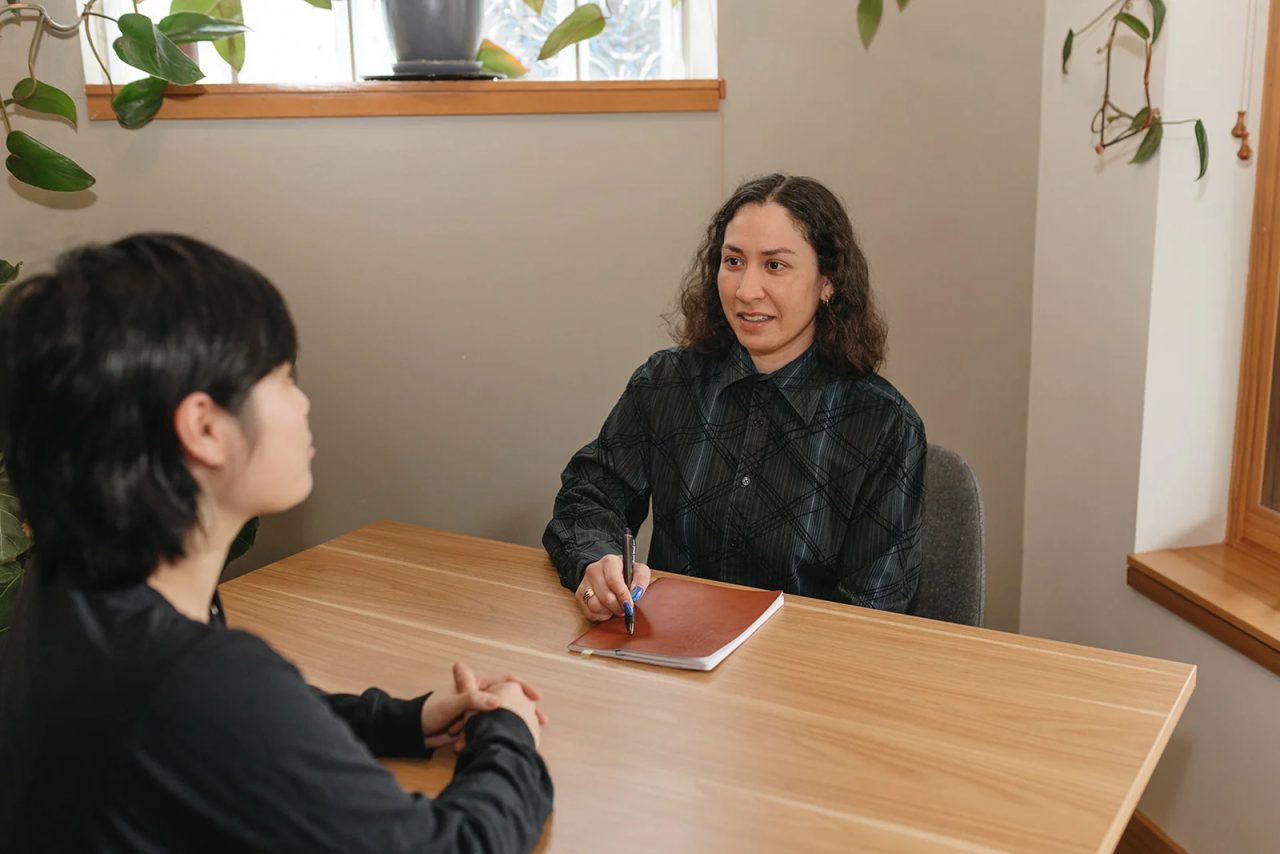
Our counselor is Madison Hollis, LPC, a Licensed Professional Counselor who works from a relational, trauma-informed, and mindfulness-based perspective with individuals and couples, including people navigating life transitions, identity, anxiety, and depression. [2] She offers a free 15-minute consultation first, so you can get a sense of each other before committing to anything.
Sessions are 60 minutes. Individual sessions are in person at the clinic on East Burnside or by video; couples sessions are in person. [2] What you say in that room stays in that room, within the legal limits every licensed counselor works under, and Madison can walk you through those limits.
Madison is in network with Providence, Moda, Regence, and PacificSource; if your plan is not on that list, ask about private-pay rates. [2] If your employer offers an employee assistance program, those free sessions usually run through the program's own network first; our employer benefits guide explains how that works and how to continue afterward.
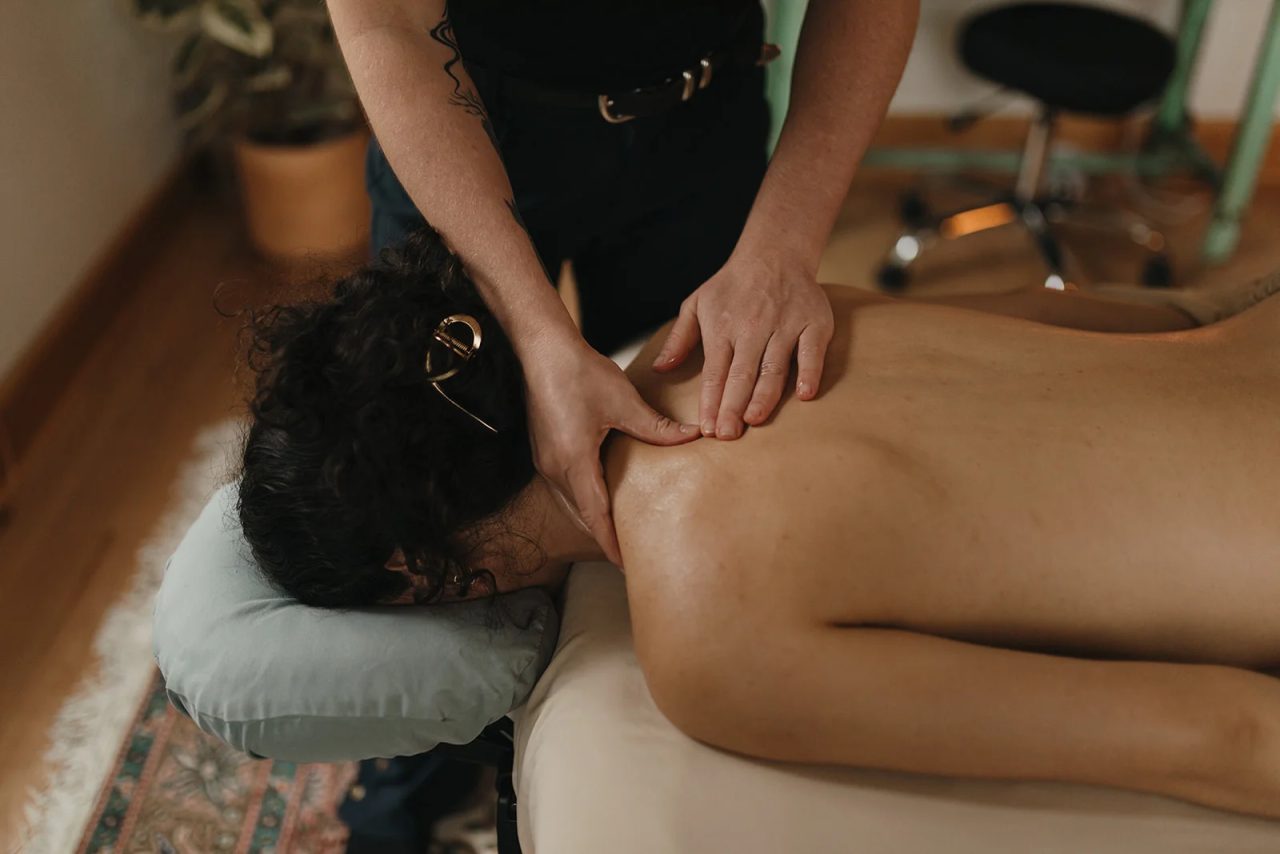
Some people also find the body side of this worth tending. Acupuncture here is used for stress, anxiety, and burnout, and Lindsey Rockwell, LAc, our co-owner, describes part of her practice as restorative support for people who are burned out. [3] It is not a substitute for counseling. For some people it is a good companion to it.
If you are new here, the first-visit checklist covers scheduling and intake. Book Madison's free consultation when you are ready, or call the front desk at 503-758-9760 and say you would like to talk to someone.
If you are in crisis right now
Call or text 988, the Suicide and Crisis Lifeline. It is free, confidential, and open every hour of every day, for mental health struggles, emotional distress, substance use concerns, or just needing someone to talk to. [4] In an emergency, call 911.
Sources
- World Health Organization, "Burn-out an 'occupational phenomenon': International Classification of Diseases," 2019-05-28. https://www.who.int/news/item/28-05-2019-burn-out-an-occupational-phenomenon-international-classification-of-diseases
- Mandala Medicine & Wellness, mental health counseling service page and Madison Hollis, LPC bio (format, session length, free consultation, insurance), read 2026-10-07. https://mandalamed.com/services/mental-health-counseling
- Mandala Medicine & Wellness, acupuncture service page ("Stress, anxiety, and burnout" under what we treat) and Lindsey Rockwell, LAc bio ("restorative lifestyle support for burnt out people"), read 2026-10-07. https://mandalamed.com/services/acupuncture and https://mandalamed.com/practitioners/lindsey-rockwell
- 988 Suicide and Crisis Lifeline (call, text, or chat; 24/7/365; free and confidential), read 2026-10-07. https://988lifeline.org/
Questions
No. The World Health Organization classifies burn-out as an occupational phenomenon, not a medical condition, and defines it by exhaustion, cynicism toward one's job, and reduced professional efficacy. A counselor can still help with it; you do not need a diagnosis to be seen.
From the inside, you often cannot. Burnout tends to be tied to work and ease with real distance from it; depression tends to follow you everywhere, including into things you used to enjoy. A licensed counselor is trained to tell the two apart and to notice when both are present.
No. Book the free 15-minute consultation with Madison Hollis, LPC, online or by phone. If your insurance requires anything, the front desk will tell you when you book.
Yes. Individual sessions are available in person or by video, and the link arrives in your appointment reminder. Couples sessions are in person.
The consultation exists for that. Fifteen minutes, free, no obligation, with someone whose job is to help you figure out whether this is the right next step.